


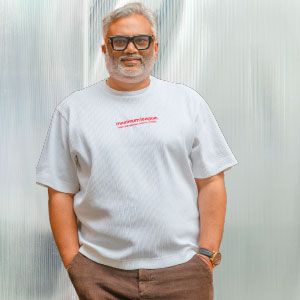
Mahesh Pandit
Founder
India’s premium fenestration market is moving decisively beyond windows and doors as standard building components. Architects are asking for larger openings, slimmer profiles, improved thermal performance, more daylight and architectural forms that demand far greater engineering precision.
At the same time, sustainability and energy efficiency are increasingly influencing how glazing is specified across residences, institutional developments and public infrastructure. The result is a market where the strongest differentiator is increasingly the ability to solve an architectural problem, rather than merely supply a product.
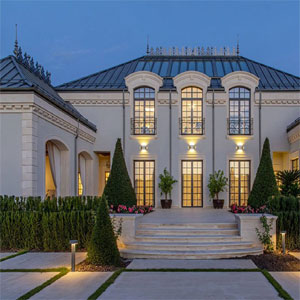
Good Windows operate precisely in this specialist space. Rather than pursuing large-volume builder projects, the company has built its business around premium windows and doors, highly engineered skylights and architectural glass structures where design complexity demands close coordination between architecture, engineering, manufacturing and installation.
Its work spans India, collaborating with architects, designers, homeowners and institutional clients, particularly on projects where conventional systems cannot adequately address the architectural intent.
Behind this approach is Mahesh Pandit, Founder, Good Windows, a civil engineer with an MBA in Finance and nearly 25 years of experience in the construction industry. His professional journey includes working on high-end projects in the Middle East before returning to India and building a business around specialised glazing, skylights, windows and doors.
International exposure continues to influence the company’s approach to products and technology. Increasingly, however, Good Windows is also focused on developing the design, engineering and manufacturing capability required to create sophisticated architectural glazing solutions within India.
Choosing Complexity Over Volume
Good Windows’ trajectory is unusual in an industry where growth is often measured through manufacturing volumes, project counts or workforce expansion. The company has consciously resisted that template. “We are not into mass-volume projects. We are very selective, particularly wherever there is a design challenge. That is where we like to get involved,” says Pandit.
That philosophy explains why Good Windows has maintained a focused organisation even as the technical ambition of its projects has increased. Instead of concentrating on repetitive, high-volume contracts, it has invested in specialist expertise, technology and relationships with international brands while simultaneously developing its own capabilities.
The company also studies how architectural trends are evolving - larger glazing, sophisticated daylighting, increasingly complex forms and the growing expectation that building-envelope systems contribute both aesthetically and functionally to architecture.
“We have always tried to stay ahead of the curve,” Pandit explains. “We keep watching where design trends are evolving, how architects are changing their design language and what technologies will be required to make those ideas possible”.
Making Design Buildable
One of the clearest expressions of this philosophy is Good Windows’ work with free-form structures. Unlike conventional glazing systems based largely on repetitive geometries, free-form structures can follow complex architectural forms without a standard pattern.
Executing them requires far more than fabrication. Geometry, structural engineering, material selection, manufacturing tolerances, glazing and site installation have to function as one coordinated system. This is also why Good Windows prefers to become involved at an early stage of a project.
“We try to participate from the design stage so that the structural solution is integrated into the architecture from the beginning,” says Pandit. “These are not systems that can simply be introduced at the last minute. Considerable engineering and preparation have to happen beforehand.”
Early involvement allows the company to evaluate geometry, structural requirements, materials, glass specifications, fabrication constraints and installation methodology while the architecture is still evolving. The objective is not to dilute an architect’s idea to make it buildable, but to engineer a practical route through which the original design intent can be realised.
We want Good Windows to be recognised as a specialist in highly engineered skylights and architectural glass structures - particularly projects where conventional systems cannot adequately address the architectural intent
Where Process Meets Performance
The complexity of bespoke architectural work creates another challenge: quality cannot remain dependent upon individual experience alone. “We don’t want quality to remain dependent on individuals; we are building Good Windows as a process-driven organisation,” says Pandit.
Processes extend from project and product selection through engineering, production-quality monitoring, delivery, installation and final customer satisfaction. The intention is to make precision repeatable even when the projects themselves are not repetitive. Technology supports this discipline through specialised software used across design, engineering, manufacturing and internal process control.
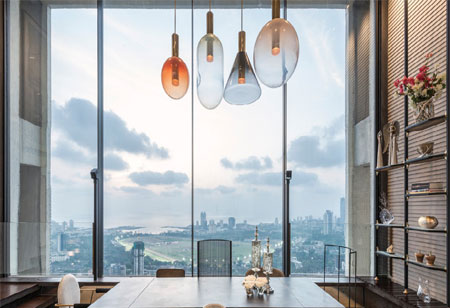
Good Windows’ definition of a premium product is similarly performance-oriented. Higher price alone does not make an architectural system premium. Longevity, performance, energy conservation and sustainability must justify the investment throughout the product lifecycle.
High-performance glazing can influence daylight, solar heat gain, thermal comfort and energy consumption. Consequently, glass specification, framing systems, materials and the engineering surrounding an opening must increasingly be considered together rather than as isolated components.
Skylights That Solve More Than Daylighting
Good Windows’ metro projects provide a strong demonstration of this engineering philosophy. For an underground Pune Metro station, the company was tasked with carrying natural daylight deep into the station. Its response was an approximately 12,000-square-foot glass skylight, designed to allow daylight to penetrate towards the metro platform.
Daylighting, however, represented only one part of the challenge. Underground infrastructure brings demanding fire and smoke-management requirements. Good Windows therefore incorporated a mechanism through which the skylight can open automatically during a fire event to facilitate smoke ventilation - combining architectural expression, daylighting and safety functionality within the same engineered structure. The company’s free-form capabilities were subsequently demonstrated at Mumbai’s CSMT Metro Station, where Good Windows designed, engineered, manufactured and installed a landmark free-form glazed entrance canopy.
Unlike a conventional rectilinear skylight, the project required control over complex geometry throughout design, engineering, fabrication, glazing and installation. The complete solution demonstrated that sophisticated architectural geometries can be engineered and delivered within India, integrating multiple specialist disciplines into a single execution strategy.
Projects such as these have also begun changing how the market perceives Good Windows. Major infrastructure and real-estate organisations including Tata Projects, L&T, Hindustan Construction and Oberoi Realty have approached the company in connection with complex structures for developments including metros and airports.
Increasingly, Good Windows is being called upon not simply to execute a predefined glazing package, but to participate in determining how ambitious architectural glass structures can actually be realised.
Building the Next Chapter Around Architectural Glass
Good Windows now intends to sharpen this positioning further. While premium windows and doors continue to represent an important part of its business, the company’s future strategy is increasingly focused on highly engineered skylights and architectural glass structures, alongside high-end steel windows and doors.
“We want Good Windows to be recognised as a specialist in highly engineered skylights and architectural glass structures - particularly projects where conventional systems cannot adequately address the architectural intent,” says Pandit.
Achieving that ambition will require specialist talent. Complex architectural structures need engineers and designers who are not only technically capable but also comfortable working on projects where obvious precedents may not exist. Developing such expertise remains one of the company’s priorities for its next phase.
Good Windows, however, does not intend to pursue scale merely for the sake of becoming a larger organisation. Its roadmap remains consistent with the philosophy that has shaped its development so far: stay selective, deepen expertise, embrace advanced technology and pursue projects where engineering can materially expand architectural possibilities.
As Indian architecture becomes more ambitious in form, daylighting and performance, Good Windows is positioning itself for assignments where the question is no longer simply which window, door or skylight to install - but how to turn an architect’s most challenging idea into a structure that can actually be built.
We use cookies to ensure you get the best experience on our website. Read more...
Copyright © 2026 siliconindia Homes. All Rights Reserved.