


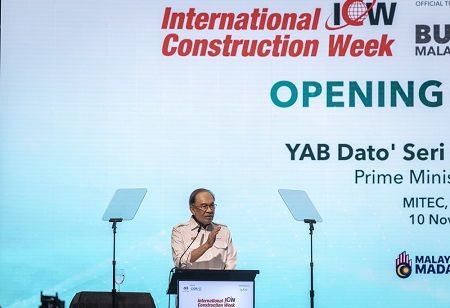
Malaysia plans to deliver one million affordable homes by 2035, including 500,000 units by 2030, using modular construction, 3D concrete printing and advanced building technologies to improve affordability and construction efficiency.
Malaysia aims to deliver one million affordable homes by 2035 by adopting advanced construction technologies, including modular building systems and 3D concrete printing. Prime Minister Anwar Ibrahim announces the target while inaugurating International Construction Week (ICW) and BuildXPO Malaysia 2026 at the Malaysia International Trade and Exhibition Centre in Kuala Lumpur.
Under the 13th Malaysia Plan, the government targets the delivery of 500,000 affordable homes by 2030, forming the first phase of its broader national housing ambition. The initiative aims to accelerate housing development while ensuring affordability, safety, construction quality and liveability.
Also read: Emirates Launches $8 Mn Hospitality Excellence Centre in UAE
Anwar says technological advancements must help the country build homes more efficiently and reduce development costs without compromising essential standards. He also highlights the need for Malaysia to move beyond adopting imported construction technologies and develop domestic capabilities in manufacturing, commercialisation and innovation.
The government is encouraging collaboration between the Construction Industry Development Board (CIDB), private-sector companies and research institutions to advance modular construction and explore 3D concrete printing. These technologies can support faster project execution through factory-produced building components, automated processes and improved construction planning.
Under the 13th Malaysia Plan, major government and public higher education infrastructure projects valued at RM100 million and above are required to achieve a minimum Industrialised Building System (IBS) content of 70%. The policy is intended to encourage wider adoption of modern construction methods and strengthen the country's industrialised building ecosystem.
Anwar also calls for local contractors, particularly small and medium-sized enterprises, to participate in the sector's technological transformation. He emphasises the importance of providing businesses with access to training, technical knowledge, investment opportunities and new markets.
Also read: Hyderabad Residential Real Estate Market Outlook & Trends
The evolving construction industry will require skilled professionals in digital design, automation, robotics, advanced manufacturing and technology-enabled building processes. Developing these capabilities is expected to support domestic innovation and create opportunities for Malaysian companies to participate in regional and international markets.
The Prime Minister further stresses the importance of transparent procurement and competitive tender processes to reduce unnecessary expenditure and improve the use of public resources. He says construction-sector transformation should be measured by its impact on people's lives rather than solely by the number of projects completed or technologies introduced.
Through the affordable housing target and construction technology initiatives, Malaysia aims to strengthen its domestic building industry while expanding access to quality housing for its population.
We use cookies to ensure you get the best experience on our website. Read more...
Copyright © 2026 siliconindia Homes. All Rights Reserved.
