


For most Indian households, cookware is a purchase made with familiarity. Families tend to return to brands they have used for years, often accepting certain inconveniences as simply part of cooking. Yet consumer thinking around food has changed. Health, ingredients and nutrition are receiving greater attention, while the cookware used to prepare that food is still often overlooked.
“Cookware is one of the most overlooked health decisions in an Indian household,” says Pratham, Founder, Zira Cookware. That belief became the starting point for a young Chennai-based brand that wants to change how people think about everyday cookware.
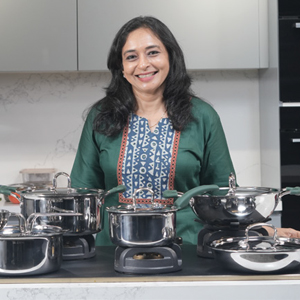
Zira emerged from Pratham's family business in kitchen appliance distribution, where he observed a growing shift in consumer preferences following COVID-19. As awareness around cookware materials increased, consumers began looking beyond conventional non-stick and aluminium products for healthier alternatives.
Rather than simply adding another cookware brand to the market, Zira saw an opportunity to address the compromises consumers had come to accept. Its proposition is built around a straightforward question: what if cookware could remove the everyday frustrations people have simply learned to live with?
Turning Everyday Frustrations into Product Ideas
Triply stainless steel cookware became the natural starting point. With two stainless steel layers surrounding an aluminium core, triply construction offers efficient heat distribution and compatibility with both gas and induction cooking. But Zira's approach was not to stop at the material itself. The company looked closely at how people actually use such cookware and identified familiar pain points.
One was the stainless steel handle, which can become hot during cooking and make handling less comfortable. Zira developed a patented fireproof, anti-slip silicone handle backed by a 10-year warranty. The innovation is simple, but deliberate: instead of expecting users to adapt to the cookware, the cookware should work better for the user.
The same thinking led to Zira's Ceramic Triply range. While triply cookware offers durability and efficient heating, it is not naturally non-stick. Zira addressed this by combining triply construction with a ceramic layer designed to provide non-stick performance without conventional chemical coatings. The range also remains induction-compatible, giving consumers greater flexibility in modern kitchens.
The thinking behind these products comes from real experiences. Pratham recalls how his mother, cooking in Chennai's heat and humidity, would often switch off the kitchen fan while using a traditional roti tawa because the flame could be disturbed. With an induction-compatible Ceramic Triply tawa, that compromise disappears. For Zira, such details are where meaningful innovation begins.
Testing Products before asking Customers to Trust Them
Zira's product development process is similarly grounded in actual kitchen use. Product ideas often begin with conversations within the founder's own family, with mothers, aunts, friends and regular cooks helping identify everyday problems. The company then works with its manufacturing partners to develop and refine solutions before putting them through extensive testing.
New products are tested at the factory and subsequently used at home for four to six months. Multiple iterations are undertaken before launch, particularly when the company is introducing a solution that differs from conventional products available in the market.
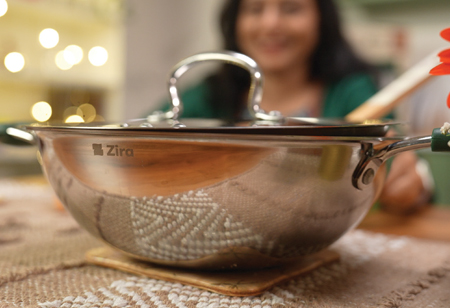
Customer behaviour has provided some of the strongest validation. Many households already own several kadais or saucepans, yet Zira has found that customers repeatedly reach for its cookware because it is easier and more convenient to use. For a brand selling products designed to last for years, that repeat preference matters more than simply generating a first purchase. It demonstrates that an innovation has become useful enough to change a household's routine.
Zira does not want to build merely another cookware portfolio. It wants to earn the kind of trust associated with brands that remain in Indian kitchens for generations
Earning Shelf Space, Then Earning a Place in the Kitchen
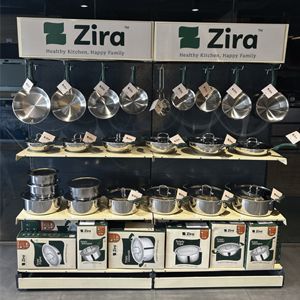
Zira has built its early presence through a combination of retail and online channels. Within its first year of sales, the company entered more than 70 retail stores across India, with a presence in markets including Chennai, Bengaluru, Mumbai, Hyderabad, Kochi, Kolkata, Guwahati, Bhubaneswar and Visakhapatnam. Its retail journey, however, was far from straightforward.
Pratham estimates that he visited approximately 300–400 retail outlets while building the brand, facing considerably more rejection than acceptance. In a category where established brands enjoy deep consumer trust, retailers had little reason to immediately take a chance on a new entrant. Those conversations nevertheless became an important source of feedback, helping Zira sharpen both its products and its proposition. In several stores where multiple triply brands were already present, the company says it has moved into the top three or four brands within a few months of entering.
“The ambition now extends beyond cookware. Zira is exploring categories such as bottles and lunch boxes, with products already moving through R&D. The common thread remains the same: identify an everyday inconvenience and find a better way to solve it”, shares Pratham.
Ultimately, Zira does not want to build merely another cookware portfolio. It wants to earn the kind of trust associated with brands that remain in Indian kitchens for generations. Its recognition among the leading Kitchen Brands in India provides early validation, but the larger ambition is long term: to become the brand families choose not because it is new, but because, after using it every day, they no longer want to cook without it.
We use cookies to ensure you get the best experience on our website. Read more...
Copyright © 2026 siliconindia Homes. All Rights Reserved.