


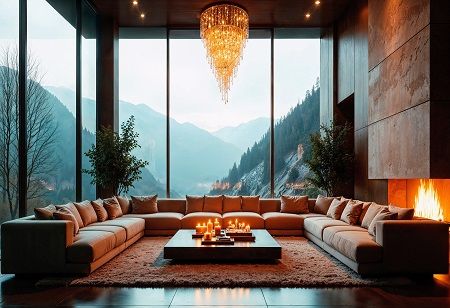
A house is not just a physical dwelling place for meals, sleeping and other activities. A house is a personal space that can have an effect on one's feelings, thoughts, relaxation and social interaction. With increasing pressure in the modern world, there is an increase in the need to ensure houses are designed to provide emotional balance. Working long hours, reliance on technology, urbanisation, lack of contact with the natural environment, and increasing indoor activity make the residential environment very important nowadays. According to the World Health Organisation, housing can affect the mental health of individuals. Overcrowding, noises, lack of natural light, environmental pollution and lack of green areas can cause problems with mental health.
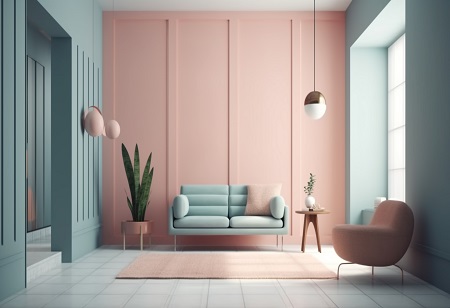 Colour plays an integral part in creating the ambience of a space. Although everyone perceives colours differently due to differences in their personal and cultural experiences, softer and more subdued colours are commonly used to achieve a relaxing effect. Warmer neutral colours, soft green colours, earth colours, and soft blue colours all help to create a calming environment with the inclusion of bolder colours through art, furniture, and accessories.
The target should not be to end up with an entirely colourless house. Too many neutral colours can make the place impersonal; however, well-chosen accents can bring life to your home décor. There are materials that you can use to enhance the sensory appeal of your space. Some of the materials include wood, cotton, linen, bamboo, stones, and many others.
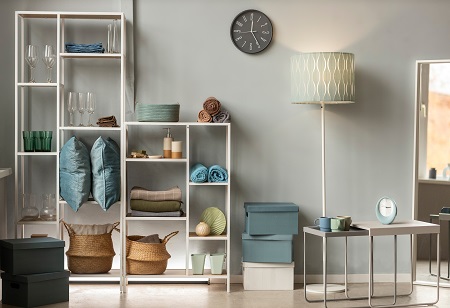 Clutter is a major cause of visual distraction at home. When various items build up on tables, counters, and the floor, it becomes very hard to control such an environment. It does not have to be a very minimalistic environment in order to be well-organised, but just having a place for all the various items that people use.
Storage thus becomes a key feature of wellness-centred interior design. Built-in cupboards, hidden storage, multifunctional pieces of furniture, and well-arranged shelves could assist in keeping things visually organised. Doorways may have designated spaces for shoes, bags, and keys, and kitchen areas may employ effective storage solutions in order to avoid cluttering the countertops. The bedrooms should be designed relatively simply so that the room is linked only with sleeping.
In recent studies of the psychological needs within the built environment, various features have been considered such as privacy, biophilia, clutter, and temperature of color. The intention is not to clear out one’s possessions, but to maintain a state in which the home continues to be controllable and visually pleasant.
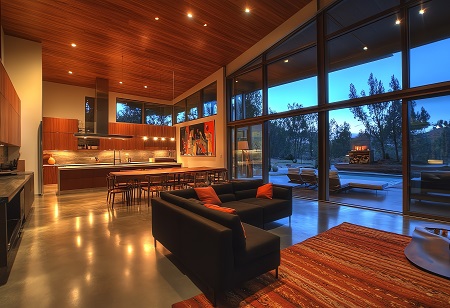 Privacy is important for one’s emotional peace, especially in houses where there are several family members living together. A good design will ensure that there are places where people can have privacy as well as interaction. An open-plan design can promote interaction among the family members, but not all activities will be carried out in an open space.
The reading nook, study room, balcony, window seat, or bedroom can act as an oasis for oneself. It is possible to create one’s own oasis without using extra spaces by changing the layout of furniture, adding screens, curtains, bookcases, and half walls even in small spaces. It becomes particularly significant when people are working or studying from home.
We use cookies to ensure you get the best experience on our website. Read more...
Copyright © 2026 siliconindia Homes. All Rights Reserved.
