


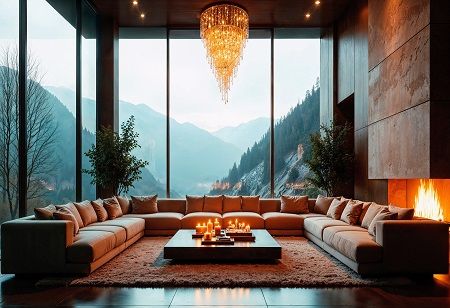
A house is not just a physical dwelling place for meals, sleeping and other activities. A house is a personal space that can have an effect on one's feelings, thoughts, relaxation and social interaction. With increasing pressure in the modern world, there is an increase in the need to ensure houses are designed to provide emotional balance. Working long hours, reliance on technology, urbanisation, lack of contact with the natural environment, and increasing indoor activity make the residential environment very important nowadays. According to the World Health Organisation, housing can affect the mental health of individuals. Overcrowding, noises, lack of natural light, environmental pollution and lack of green areas can cause problems with mental health.
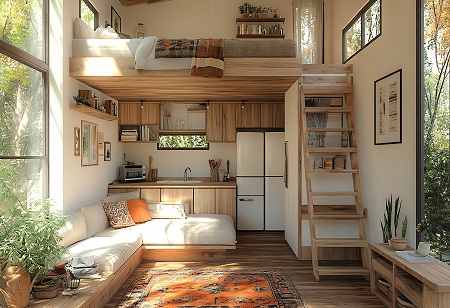 Well-designed elements have the ability to foster habits conducive to good mental health. The presence of a designated work area will facilitate better concentration, while the presence of an ergonomic reading nook will motivate people to read without any distractions from screens. A well-equipped kitchen will facilitate healthy home-cooked meals.
The bedroom needs special consideration since it must provide conditions for rest rather than constant activity. Excluding all work-related items as well as lights and other sources of entertainment, will make it easier to associate the room with relaxation. Having a separate area where one could meditate and reflect can serve the same purpose. The designated areas don’t have to be spacious; just a properly arranged chair near the window may be enough.
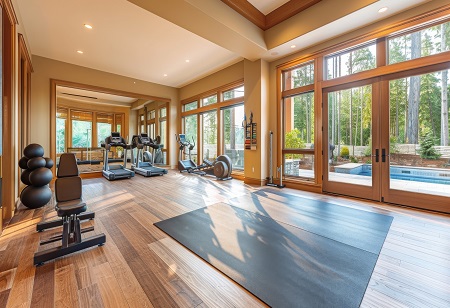 Well-being of mind does not come from one type of design pattern. Every individual has varying needs depending on his/her age, occupation, family and lifestyle. Adaptive housing design helps in dealing with such needs more easily. Portable furniture, movable partitions, and adaptable rooms help in using the room space for varied purposes without cluttering it.
Flexibility becomes particularly important when it comes to houses in urban areas because the living space available is quite restricted. The same dining table may serve as a workplace, the guest bedroom may act as a study room, and the balcony can serve as a relaxation space. However, at the same time, multifunctionality needs to be complemented by order both visually and physically because otherwise, one will have difficulty figuring out what is going on inside the house.
Home designs may have an impact on psychological health in the sense that they determine what one's immediate surroundings will look like where he or she relaxes, works, interacts and recharges. The aspects of natural lighting, plants, proper air circulation, acoustics, colour, storage, privacy and personalisation may altogether help in creating relaxing surroundings. This is very important as individuals are spending most of their time indoors.
However, it may be that what works best does not have to be costly or luxurious. A psychologically healthy home environment could come from some fairly straightforward choices: more natural light in rooms, less clutter, some plants, making a peaceful place, improved storage systems, a separation between work and relaxation areas, and using materials that are comforting. Healthy housing depends not only on the quality of the house itself but also on how it responds to the needs of the people inside.
In the end, the perfect home is not only beautiful but should make one feel comfortable living there. Designing in a way that takes into consideration the comfort that a person feels in their home, besides the functional part, enables the home to be more than just somewhere where one lives. It turns into something much better.
We use cookies to ensure you get the best experience on our website. Read more...
Copyright © 2026 siliconindia Homes. All Rights Reserved.
