


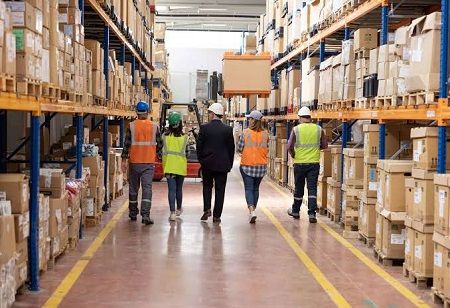
India’s industrial and logistics sector records 59.1 million sq ft of space absorption in the first nine months of 2026, while smaller cities increase their contribution amid growing demand for warehousing and industrial facilities.
India’s industrial and logistics real estate sector recorded strong demand during the first nine months of 2026, with total space absorption reaching 59.1 million square feet, an increase of 6.9% year-on-year, according to a report by property consultancy Savills India. The market also recorded robust activity in the July-September quarter, when absorption rose 14.1% to 24.3 million sq ft compared with 21.3 million sq ft in the corresponding period of 2025.
Major metropolitan markets continued to account for most of the demand, but smaller cities also expanded their contribution. Tier-I cities recorded 19.9 million sq ft of absorption in the third quarter, representing 82% of the total. Tier-II and Tier-III cities contributed 4.4 million sq ft, or 18%, highlighting the growing role of emerging locations in India’s industrial and logistics network.
Also Read: Beyond Metros: Redefining Hospitality Performance
Delhi-NCR remained the largest market, accounting for 20% of total absorption during the quarter. Bengaluru followed with 16%, while Mumbai and Pune accounted for 14% and 13%, respectively. The results reflect continued demand for industrial and warehousing space across established distribution and manufacturing hubs, alongside opportunities in smaller markets.
New supply also increased during the quarter. Developers completed 26.2 million sq ft of industrial and logistics space, up 21.3% year-on-year. Tier-I cities accounted for 19.2 million sq ft, or 73% of new supply, while Tier-II and Tier-III cities contributed 6.9 million sq ft, representing 27%.
Demand for higher-quality facilities strengthened as well. Grade-A properties accounted for 66% of total absorption in the third quarter, compared with 52% a year earlier. Their share of new supply rose to 58% from 50%, reflecting greater emphasis on infrastructure quality, regulatory compliance and environmental, social and governance considerations.
Manufacturing emerged as the leading demand driver, accounting for 31% of third-quarter absorption, compared with 27% a year earlier. Third-party logistics providers contributed 26%, down from 34%, while retail’s share increased to 12% from 5%. E-commerce accounted for a stable 10%.
Also Read: Triple-Reinforced Cut-to-Size Marble Redefining Interiors 2026
The figures indicate that India’s industrial and logistics market is expanding beyond traditional metropolitan centres while attracting demand for modern facilities. Continued growth in manufacturing, distribution and organised warehousing is supporting activity across established and emerging locations.
We use cookies to ensure you get the best experience on our website. Read more...
Copyright © 2026 siliconindia Homes. All Rights Reserved.
